
State-of-the-Art Protein Footprinting
Fully-Automated, Chip-Based Footprinting on the AutoFox System
The AutoFox Footprinting System, powered by GenNext’s patented Flash Oxidation (Fox®) Technology, performs Radical Protein Footprinting (RPF) in a simplified, automated workflow to study protein higher order structure (HOS), dynamics, and interactions under native conditions.
With minimal sample requirements, unmatched throughput, and real-time radical generation control, GenNext’s AutoFox platform offers biopharmaceutical researchers the optimal blend of precision, speed, and practicality.
The system delivers accurate, high-resolution structural insights within days—without the complexity and high costs of traditional methods—giving researchers a cutting-edge yet accessible solution for faster, safer, and smarter biotherapeutic development.
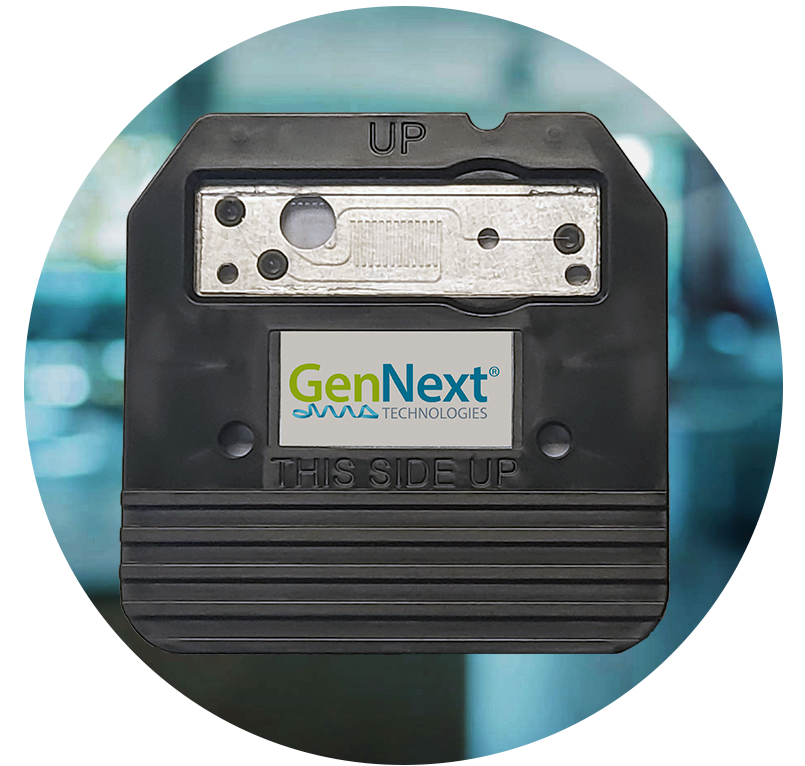
- Performs on-board reagent mixing, photolysis, and dosimetry measurements.
- Labels up to 30 μL of samples in ten seconds.
- Measures real-time effective radical load with dosimetry cell for robust and reproducible results even with varying background scavenging.
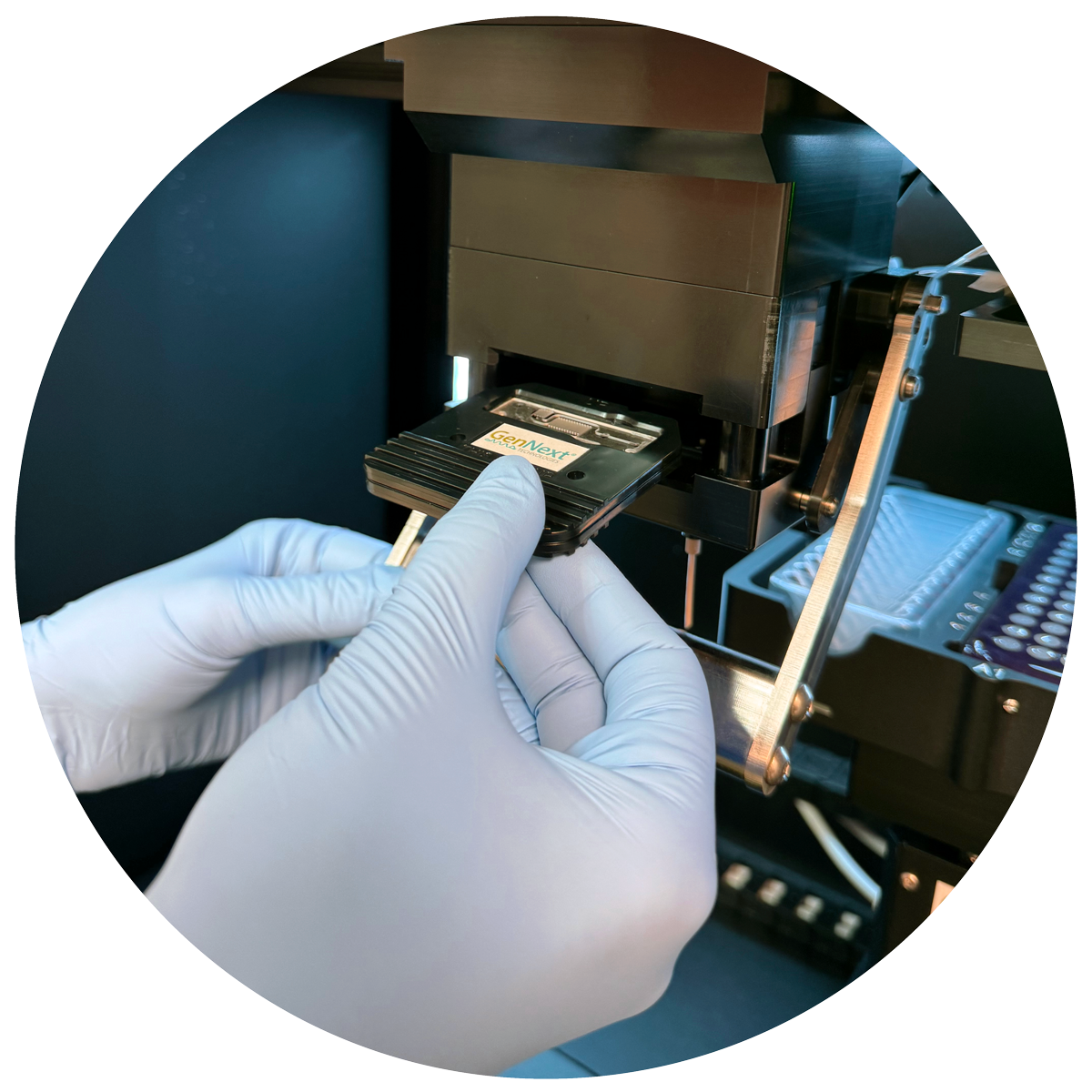
- The robot takes samples from the 96-well plate to the chip manifold assembly that communicates with the instrument’s high-precision microfluidics system to move solution through the chip.
- Automated, high-throughput capacity labels up to 48 different samples in one run.
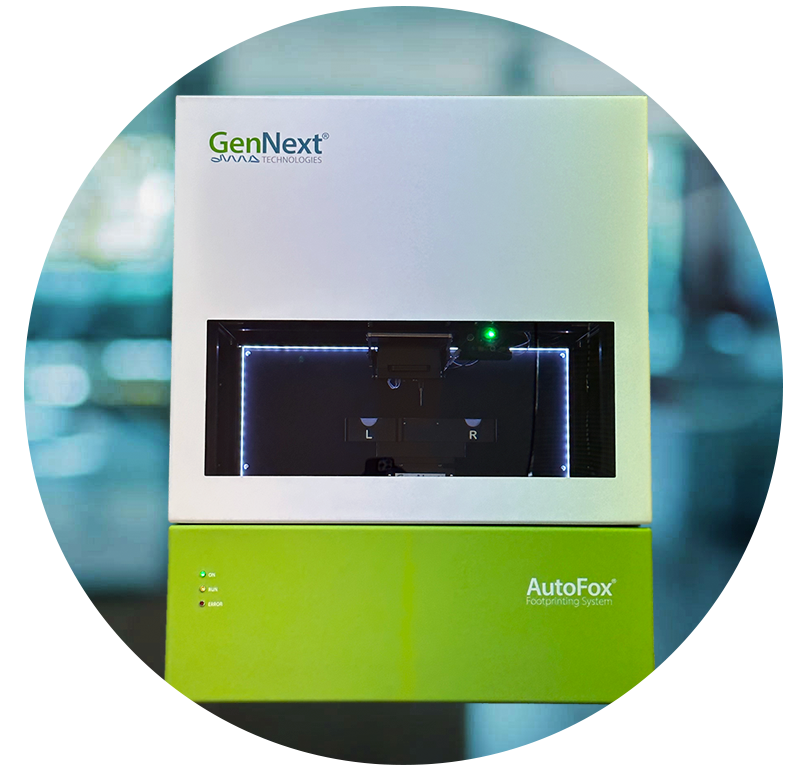
- Determines effective radical concentration in real-time.
- Automatically adjusts to varying protein load, the introduction of protein ligands, and variation in buffer composition and excipients.
- Easy-to-use control software for simple and reliable system programming and operation.
- FoxWare’s user-friendly interface and built-in analysis tools address the RPF workflow, chemical labeling/artifacts, and comparative study requirements.
- Intuitive algorithms analyze and report on qualitative and quantitative comparative studies.

Performance Advantages of the AutoFox System
From Uncertainty to Insights in Days
With exceptional structural resolution at the amino acid level, the AutoFox System accurately maps biologic and small molecule therapeutic interactions, offering researchers a detailed view of drug engagement and conformational target response critical to drug discovery workflows.
Reproducibility across experiments and conditions ensures consistent structural data, while high spatial resolution enables pinpoint mapping of interaction sites and epitopes.
Versatile enough to analyze a wide range of protein types and complexes — without the need for crystallization or specialized labels—the AutoFox System empowers scientists to address even the most challenging questions in structural proteomics with confidence.
Speeding breakthroughs in biopharmaceutical development requires tools that deliver rapid, reliable, and detailed insights into protein structures. The AutoFox System stands at the forefront of this innovation by transforming uncertainty into clear, actionable data within days.
High-Resolution Structural Characterization
The AutoFox System enables high-resolution structural characterization by quantifying site-specific changes in oxidative labeling, which directly correlate with alterations in solvent accessibility at the amino acid level. This residue-level resolution facilitates detailed mapping of protein-protein and protein-ligand interaction interfaces, as well as conformational dynamics critical to functional analysis.
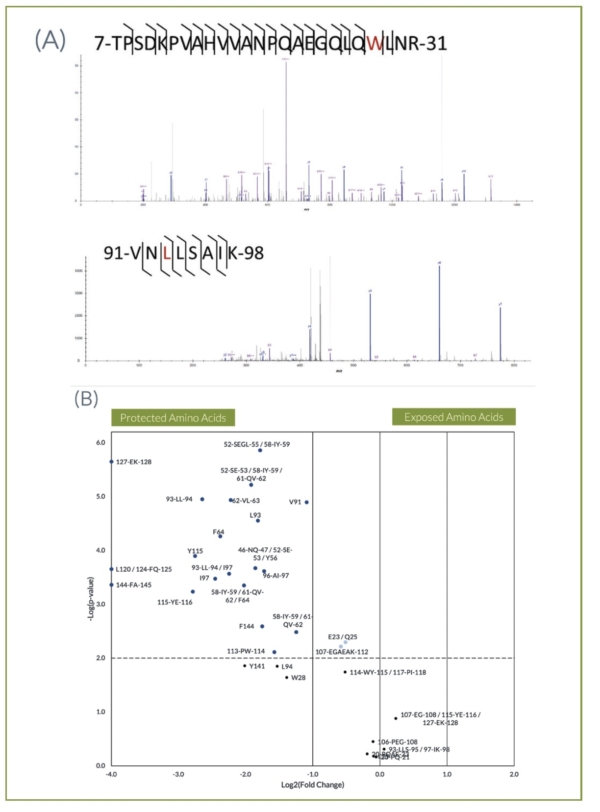
FIGURE LEGEND. (A) MS/MS analysis detects fragment ions with a +16 Da mass shift, allowing FoxWare® Software to localize the site of oxidation at the amino acid level. (B) By quantifying the chromatographic peak areas of oxidized and unoxidized species, FoxWare® Software calculates average residue-level oxidation and generates volcano plots to highlight regions with statistically significant changes—revealing structural perturbations and changes in solvent accessibility.
Excellent Spatial Resolution
By delivering precise spatial information on protein structures, the AutoFox System enables researchers to accurately map protein surfaces and pinpoint regions involved in protein-protein or protein-ligand interactions. Its ability to resolve fine structural details and localize epitopes with high accuracy makes the AutoFox System a powerful and novel tool for biopharmaceutical characterization.

FIGURE LEGEND. AutoFox footprinting results are mapped onto the crystal structure of TNFα, highlighting residues with significant protection upon adalimumab binding. Residues are shaded by fold change in oxidation: darker blue indicates >2-fold protection, lighter blue <2-fold. Known adalimumab-binding residues are shown as spheres (mutations that reduce binding >10-fold) or dots (mutations with minimal binding effect). The majority of protected residues identified correspond to those with the greatest impact on adalimumab binding. Additional protection observed at the trimer core suggests structural condensation upon antibody engagement.
Consistent, reliable structural proteomics data is essential for confident decision-making in biopharmaceutical drug discovery and development. The AutoFox System delivers highly reproducible and accurate radical protein footprinting data across time, users, experimental conditions, optofluidic chips, and setups.

FIGURE LEGEND. (A) Dose-response curves generated by the AutoFox System show strong linear correlation (R. > 0.98) between hydroxyl radical dose (ΔmAU) and applied voltage, with excellent relative standard deviations (~1–11%) across three technical replicates. Four independent biological replicates—conducted on different days using separate chips and operators—demonstrate the system’s robust day-to-day reproducibility. (B) Peptide-level analysis further confirms the consistency of HRPF labeling. Average peptide oxidation (APO) values increase linearly with radical dose across all replicates, with no outliers observed.
Free from limitations related to protein size, type, or structure, the AutoFox System can analyze a wide variety of systems—including protein complexes and cell lysates—without requiring crystallization or labeling tags. Its ability to provide residue-level insights into the higher order structures of diverse biopharmaceutical targets demonstrates the system’s utility and versatility in addressing structural proteomics challenges.

FIGURE LEGEND. Hydroxyl Radical Protein Footprinting rate constants are converted into protection factors (PFs), which show strong correlation with solvent-accessible surface area (SASA) values derived from known protein structures. Across multiple replicates and protein classes, the AutoFox System consistently demonstrates high reproducibility and quantitative agreement with structural solvent accessibility. These results validate its utility for higher order structure confirmation and underscore its versatility in analyzing diverse biopharmaceutical targets.
Flash Oxidation (Fox) Protein Footprinting Workflow
From Sample to Results in Days
The AutoFox System generates actionable data related to a protein’s structure, stability, and interaction for insights into biological function and therapeutic efficacy/safety.
From sample introduction to data analysis, the workflow can be trusted to produce reliable HOS data as the entire process is underpinned by easy, robust, and reproducible protein labeling.
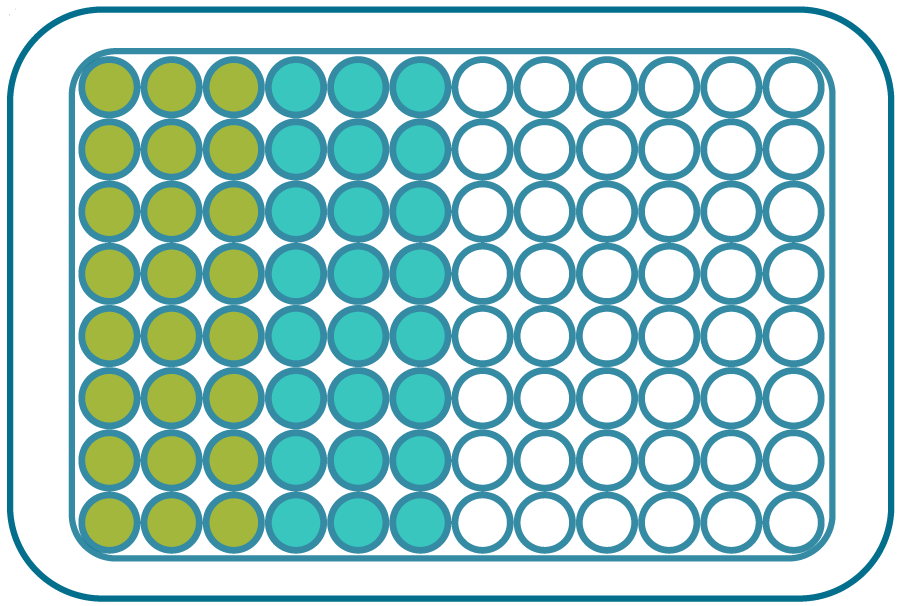
- For comparative structural studies, researchers load two different protein samples (e.g., an antigen and its antibody complex) into a 96-well plate, which is then placed on the AutoFox System’s sample deck.
- The AutoFox System automatically transfers each sample to the Optofluidic chip where the protein sample is mixed with labeling reagents, including adenine.
- The mixture of proteins and labeling reagents is exposed to intense light pulses from a high-pressure flash lamp, which photolyzes the labeling reagent, generating reactive radicals capable of modifying proteins.
- GenNext’s proprietary inline radical dosimeter monitors and adjusts the flash lamp’s intensity in real time to ensure optimal and reproducible labeling conditions. This adjustment accounts for sample variability—such as free proteins versus complexes, protein concentration, ligand presence, or changes in buffer components.
- The dosimeter measures changes in adenine absorbance to determine the effective radical concentration. Within microseconds, these radicals covalently modify the protein solvent-accessible amino acid side chains. This irreversible labeling leads to a measurable mass shift in the modified peptides, reflecting changes in protein conformation and solvent accessibility.
- Immediately after labeling, the modified protein sample is deposited into a 96-well plate containing a quench solution (typically methionine amide and N,N’-Dimethylthiourea) to arrest any further radical activity, preserving nascent structural information.

- The labeled proteins are proteolytically digested into peptides, which are then analyzed via liquid chromatography-tandem mass spectrometry (LC-MS/MS). This analysis identifies and quantifies site-specific modifications for comparison of solvent accessibility and conformational changes between the protein samples.

- The data generated from this workflow is examined using LC-MS/MS software along with FoxWare® Software, developed by GenNext for evaluation of protein HOS studies. Results from this streamlined, yet advanced structural biology workflow enables researchers to elucidate structural change, mechanisms of action, ligand binding, and conformational dynamics—insights that are essential for optimizing the stability, efficacy, and safety of biologics.
Insights from Biosimilars to AI Model Validation


Interaction & Aggregation Analysis
The AutoFox System produces precise epitope and paratope mapping for monoclonal antibodies, providing high-resolution insight into protein-protein interactions which are crucial for optimizing mAb therapeutics. In addition, Fox Footprinting identifies aggregation-prone regions in mAb formulations, providing data for formulation optimization strategies to mitigate risks and improve stability, efficacy, and immunogenicity.
Biosimilarity Assessment & Stability Optimization
This powerful method also provides a relative comparison of reference biologics and biosimilar candidates, detecting structural differences due to manufacturing or formulation variances to ensure comparability and regulatory compliance. Fox Footprinting helps researchers predict degradation pathways, optimize storage conditions, and enhance shelf-life stability by assessing the impact of formulation conditions, temperature, and storage on mAb structural integrity.
Formulation & Delivery
Fox Footprinting aids in the development of mAb formulations for therapeutics by comparing structural changes due to pH shifts, excipients, stabilizers, or process modifications, ensuring batch-to-batch consistency and product quality. Finally, the AutoFox System can monitor mAb stability under various delivery conditions to optimize drug delivery formulations, enabling the development of effective intravenous, subcutaneous, and novel administration strategies without compromising therapeutic integrity.
Target Engagement & Response
High-throughput primary screening aids in identifying initial hits for allosteric and orthosteric small molecule therapeutics, while distinguishing high-affinity binders from non-productive interactions remains a significant challenge. The AutoFox Protein Footprinting platform enhances secondary screening by identifying therapeutic binding sites and characterizing target response, ensuring only promising leads advance and eliminating compounds that fail to bind or induce desired effects.
Lead Optimization
The chemical modifications that are introduced during lead optimization to enhance specificity and binding affinity can be analyzed by the AutoFox System to confirm the retention of productive target engagement and response.
Bridging the Gap Between AI Models & Experimental Validation
Although AI generates structural predictions at an unprecedented scale, these models fail to accurately predict protein binding sites, target response, allosteric regulation, and protein flexibility. AI predictions offer powerful hypotheses, but empirical validation remains essential to refine and guide machine learning models.
Conventional Validation Methods
Traditional structural biology methods, like multidimensional NMR, X-ray crystallography, and cryo-EM, require months or even years to confirm an AI-generated hypotheses. Despite their precision, today’s ultra high-resolution structural biology techniques are costly, difficult, time-intensive, and require large amounts of purified material.
High-Speed, Empirical Validation
Only the AutoFox Footprinting platform is capable of rapidly adjudicating AI-generated drug discovery models in just days, bridging a critical gap in computational biology. With its unique ability to map solvent accessibility and detect structural shifts, the AutoFox System quickly validates AI-predicted protein-drug interactions—making it a powerful asset for drug binding confirmation, protein conformation analysis, and structural biology research.
In just one week, Fox Technology validated an AI-predicted drug binding and target response—results that were confirmed six to eight months later by cryo-EM and X-ray crystallography, proving the unmatched speed and reliability of the AutoFox System.

AutoFox Versus other Technologies
Finding the Optimal Balance for Fast, Effective Structural Analysis
Biopharmaceutical researchers often face difficult trade-offs between speed, resolution, and cost when selecting structural biology methods. Fox Footprinting provides the optimal balance—delivering actionable, high-quality structural data quickly and affordably.
Want to learn more about the pros and cons of structural biology approaches? Take a deeper dive into the comparisons of Radical Protein Footprinting on the AutoFox System versus other more traditional approaches by clicking on the button below.
