
The Evolution of Protein Footprinting
Scalable Radical Protein Footprinting
GenNext, in collaboration with our pioneering Scientific Advisory Board, has been moving the study of radical protein footprinting from a specialized, complex, and time-consuming structural biology experiment into a robust, facile, automated analytical platform suitable for routine structural analysis and emerging comparative screening applications.
The underlying science remains powerful: rapid, irreversible radical labeling captures changes in protein solvent accessibility that reveal binding interfaces, conformational changes, and distal/allosteric responses. The limitation was not what protein footprinting could reveal. The challenge was obtaining that information easily, reliably, and reproducibly.
To move protein footprinting from a specialized experiment to a practical analytical platform, GenNext optimized the method and technology for Fox® Radical Protein Footprinting (FRPF). In the process, we removed key technical barriers inherent in beamline HRPF and laser-based FPOP:

Beamline HRPF
Highly Specialized Lab & Operator
+ Powerful hydroxyl radical protein footprinting demonstrated using synchrotron radiation
– Requires access to highly specialized facilities and highly trained operators


Laser-based FPOP
Specialized Lab & Operator
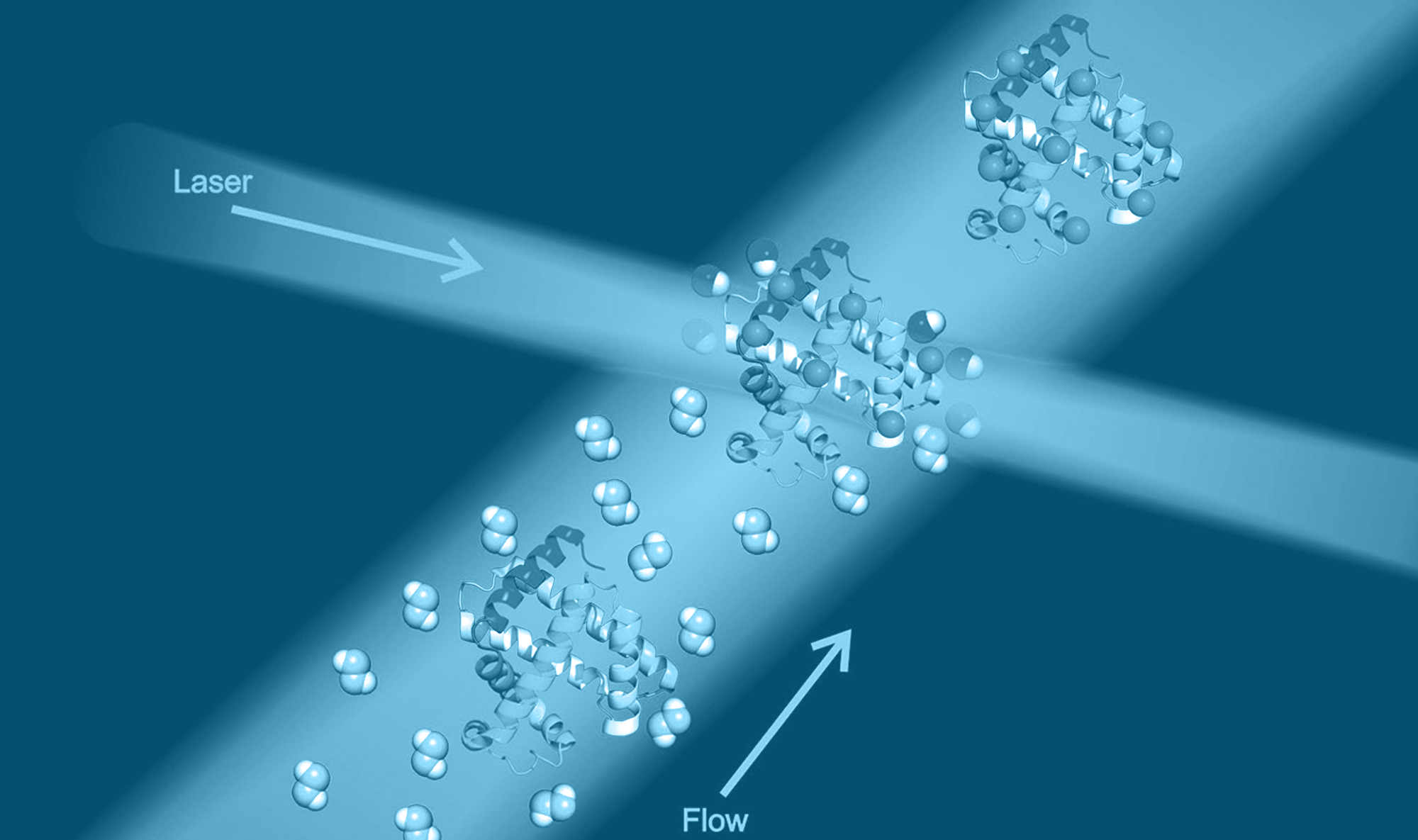
+ Moved hydroxyl radical generation into the laboratory
– Operation is technically demanding and highly operator-dependent

FRPF
Any Lab & Trained Operator
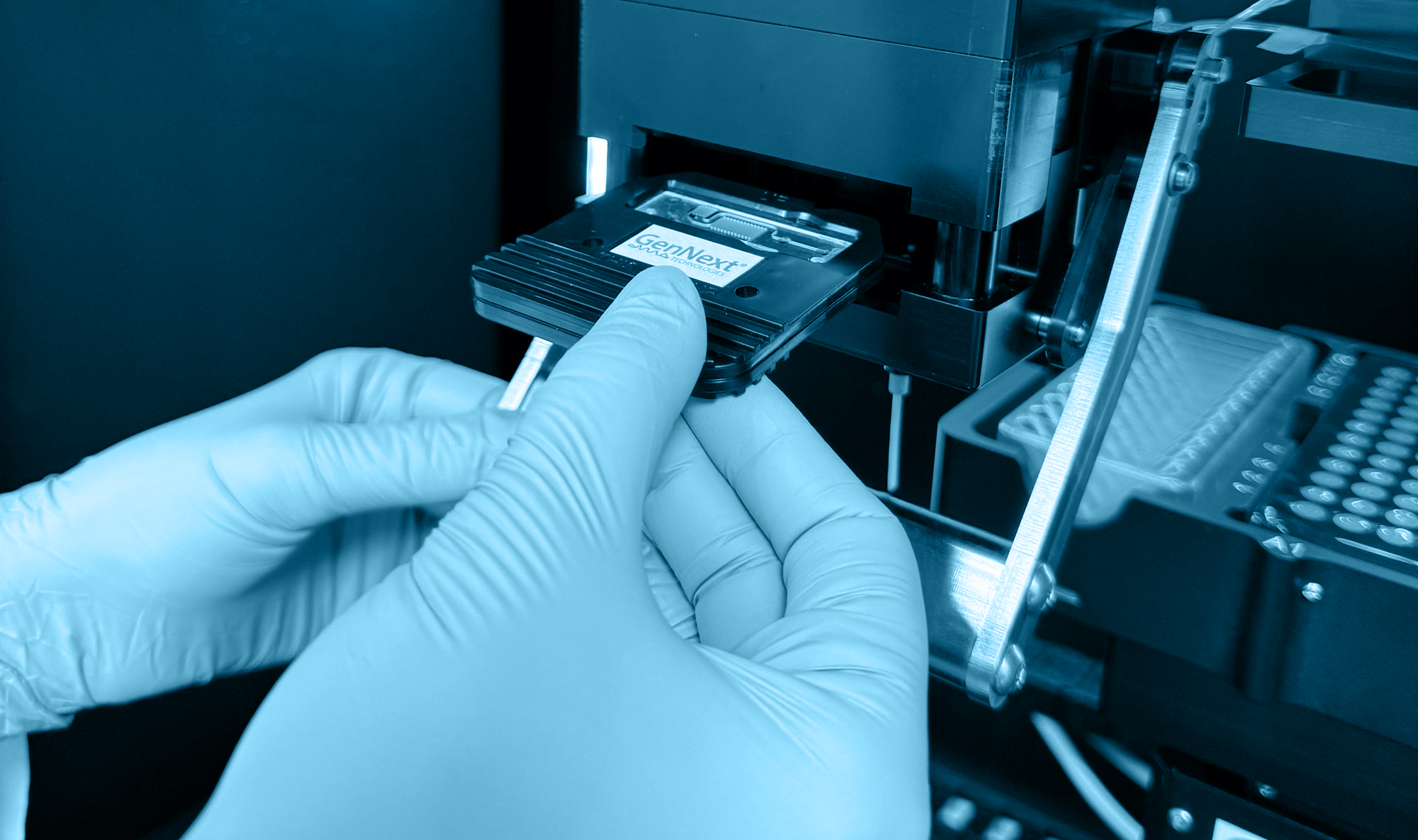
+ Integrated radical generation, fluidics, dosimetry, experimental control, and automation into a purpose-built platform
+ Easily implemented in any lab and run by a trained operator
HRPF to FPOP to FRPF
The limitation was not what radical protein footprinting could reveal. The challenge was obtaining that information easily, reliably, and reproducibly.
With FRPF, GenNext offers scientists an engineered analytical platform that makes powerful structural information practical to obtain. To avoid the imitations of beamline access to laser setup to messy fluidics, GeneNext has engineered the Fox Platform with the following innovations:
Barrier |
FRPF Innovation |
Impact |
|---|---|---|
| Specialized radiation sources — early HRPF could require synchrotron beamline access | Purpose-built benchtop photolysis | Brings routine radical footprinting into any laboratory |
| Complex laser setup — conventional FPOP could require beam alignment, focusing, and substantial setup expertise | Integrated, laser-free photolysis | Removes a major source of complexity and operator dependence |
| Fluidics/setup burden — capillary and fluidic problems could consume substantial experimental time | Integrated, standardized fluidics | Simplifies setup and improves consistency |
| Variable effective radical exposure | Integrated real-time radical dosimetry and control | Helps ensure experiments are performed at appropriate and comparable labeling conditions |
| Sample-dependent radical scavenging — buffers, ligands, excipients, and sample composition can alter effective radical dose | Dosimetry-informed experimental control | Helps distinguish genuine structural differences from labeling variability |
| Manual/operator-dependent execution | Automated fluid handling, mixing, timing, photolysis, and experimental execution | Improves precision, accuracy, repeatability, and reproducibility |
| Non-standardized and automated workflow — difficult to scale beyond individual experiments | Standardized automated workflow | Enables reliable comparisons across larger experimental series and emerging Comparative Structural Screening (CSS) |
GenNext did not reinvent the fundamental science. We reengineered the experiment.
Now, scientists can use FRPF routinely, reproducibly, and at scale.
Validation from FRPF Converts
An experienced FPOP practitioner at GenNext recalled that bringing a conventional laser-based FPOP system online could consume up to three days of her time to align and focus the UV beam, establish the optical configuration, and resolve capillary/fluidics issues before useful experimentation could begin.
Her first experience setting up the Fox platform was dramatically different. Following relocation of the instrument, it was unpacked, fitted with a capillary, connected to buffer fluidics, powered on, and ready for operation.
The contrast was striking even to an experienced FPOP practitioner. This is the meaning of “facile” in FRPF: experimental complexity has been engineered into the platform rather than left for the scientist to manage.
Two experienced structural-MS scientists recently and independently described remarkably similar experiences with conventional FPOP:

Academic Scientist
Attempted conventional excimer-laser FPOP and ultimately abandoned the effort because the system proved excessively finicky and difficult to reproduce reliably. After reviewing the Fox platform's evolution, the scientist recognized that the advances in experimental control and reproducibility had materially changed the practical usability of footprinting.
Industry Scientist
Described FPOP as not always sufficiently robust or high-throughput, particularly for broader screening applications. The advances that specifically renewed the scientist's interest were automation, dosimetry control, reproducibility, and comparative structural screening.