Realizing AI’s Promise
in Drug Discovery
AI-Enabled Discovery Needs Early Experimental Structural Intelligence
Artificial intelligence is transforming the way researchers predict protein structures, design biologics, explore drug-target interactions, and prioritize small-molecule candidates. Computational methods can now propose more plausible structures, binding interfaces, and therapeutic hypotheses than laboratories can realistically interrogate using traditional high-resolution structural techniques. Yet a compelling in silico prediction is still a hypothesis. Researchers need to know how the protein actually responds to a drug, where the response occurs, and whether that response supports the proposed mechanism.
Detailed Structure, Delivered After the Decisions
For decades, high-resolution structural biology has often been concentrated toward the end of the discovery process. X-ray crystallography, cryo-electron microscopy, and NMR can demand substantial protein material, specialized preparation, and extended campaigns. After months of screening, optimization, and investment, detailed structural results have frequently served as a final confirmation—or an expensive reason to reconsider a candidate. Meanwhile, earlier decisions have depended heavily on affinity, activity, stability, and other generalized biophysical measurements that reveal important properties but offer less spatially resolved information about structural response.
FRPF Changes When Structural Biology can Influence a Decision
GenNext’s Fox® Radical Protein Footprinting (FRPF) brings high-resolution, residue-level structural information into the early phases of the discovery process. By delivering comparative structural evidence in days rather than months, with approximately 50–100 times less protein material than conventional structural biology workflows, FRPF makes it practical to ask detailed structural questions while candidate selection and optimization are still underway—not only after those decisions have been made.

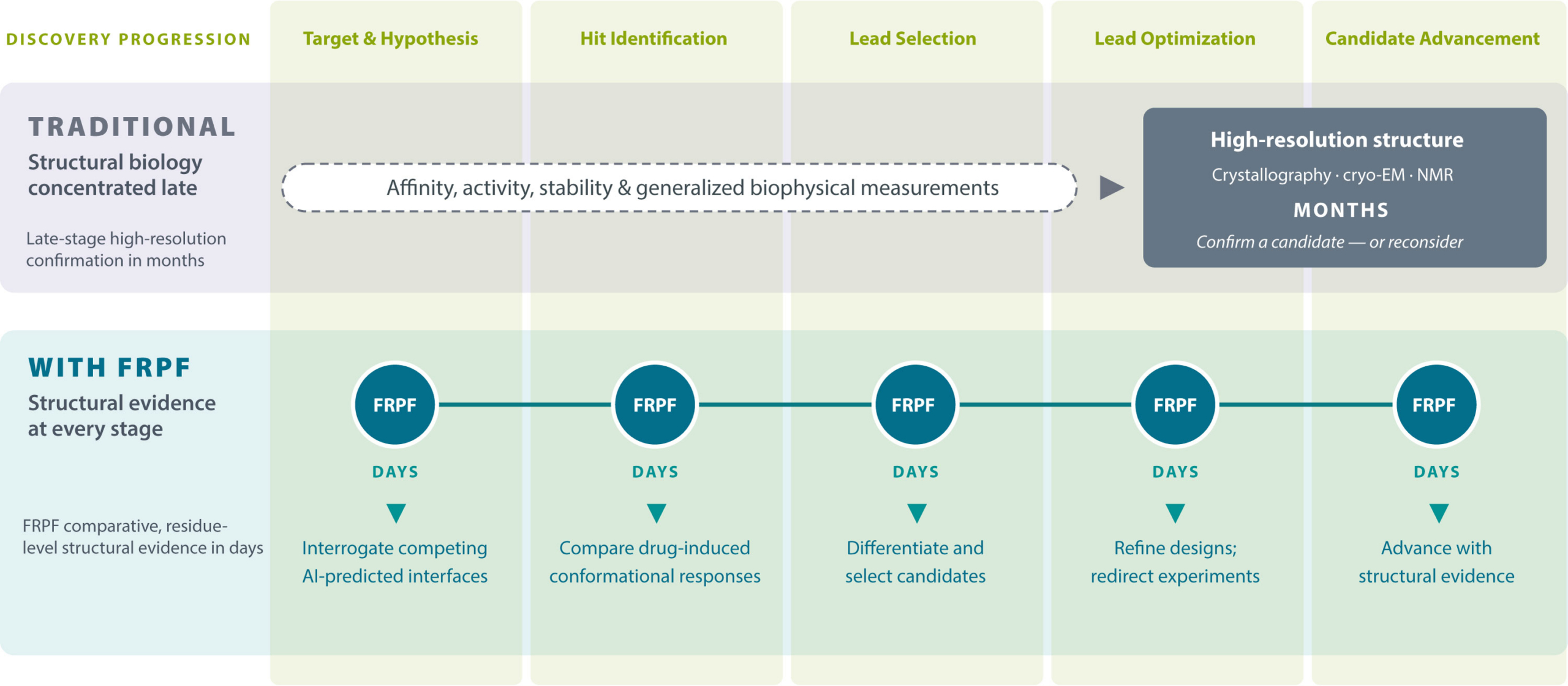
This change in timing is transformative. Teams can investigate competing AI-predicted interfaces, compare drug-induced conformational responses, examine candidate-specific epitope or paratope behavior, and redirect experiments before committing significant time and material. Structural evidence becomes an iterative guide to discovery: select, measure, learn, refine, and advance. Faster turnaround and microgram-scale sample needs also open the door to scarce targets, early-stage constructs, and broader candidate comparisons that may be impractical with traditional methods.
Closing the AI–Experiment Feedback Loop
Turn AI-generated Possibilities into Experimentally Informed Choices
AI can suggest that a drug engages a particular pocket, that an antibody recognizes a predicted epitope, or that a designed protein adopts a desired conformation. FRPF enables researchers to interrogate those proposals against measured protein behavior. A candidate may exhibit the expected local protection, a different interface, or a structural response extending far beyond the predicted binding region. Each outcome informs the next step: advance the candidate, redesign the molecule, test an alternative mechanism, or focus orthogonal experiments where they can resolve the most consequential uncertainty.
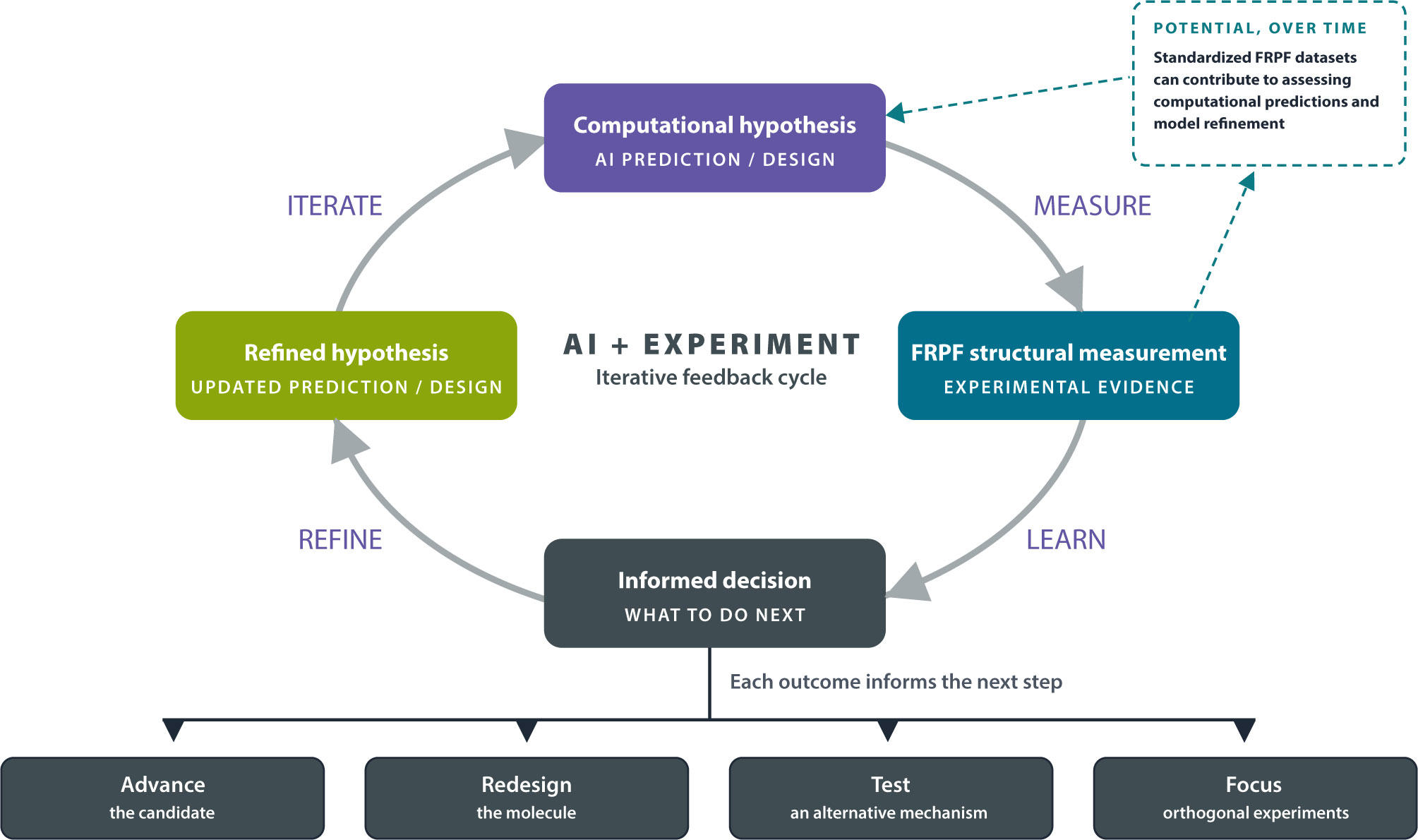
Standardized FRPF datasets can also contribute to assessing computational predictions and, over time, improving the evidence available for model development and refinement. Rather than waiting for structural validation at the end, discovery teams can use measured structural responses to steer the work as it progresses. The same approach strengthens conventional drug discovery; AI simply magnifies the need for a fast, scalable empirical decision layer.
This is the opportunity at the intersection of AI and FRPF: a practical feedback cycle in which computational hypotheses and high-resolution experimental evidence inform one another repeatedly.


From a Specialist Experiment to a Routine Discovery Capability
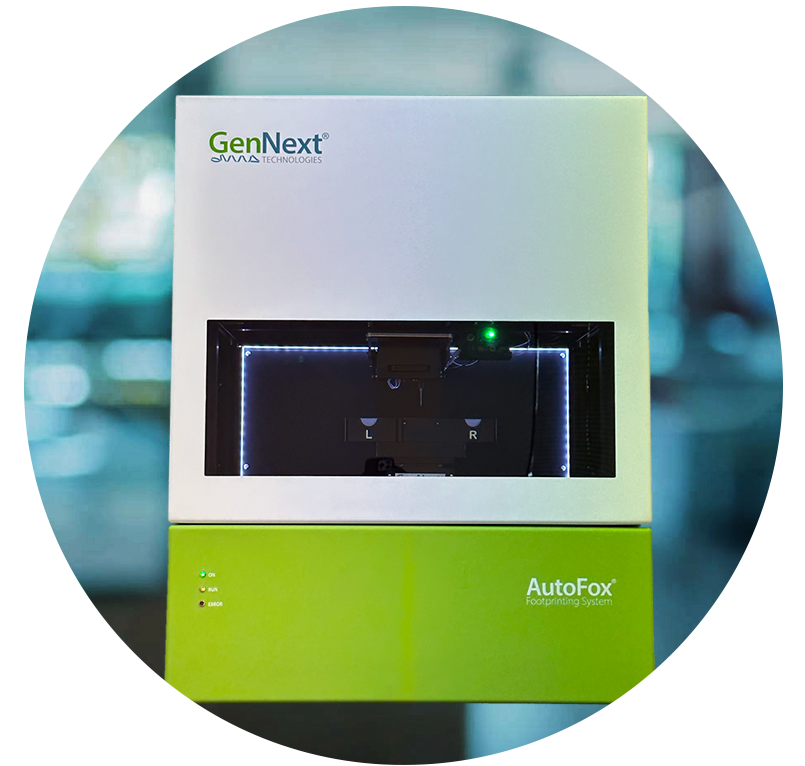
GenNext makes FRPF accessible through contract research services as well as AutoFox® and SamFox instrumentation for laboratories building internal capability. Proprietary instrument-control programs, the AutoFox Data Analyzer (ADA) and FoxWare® Software data analysis support a connected experimental and analytical workflow. Teams can begin with a focused comparative question, expand into candidate-screening programs, or incorporate FRPF routinely into discovery and development. AI is changing how quickly scientists can imagine the next therapeutic.
FRPF is changing how early—and how often—they can obtain the high-resolution experimental structural evidence needed to make it real. With answers in days, 50–100× less material and residue-level insight into protein response, structural biology can guide discovery instead of merely judging its outcome.